
 By
By 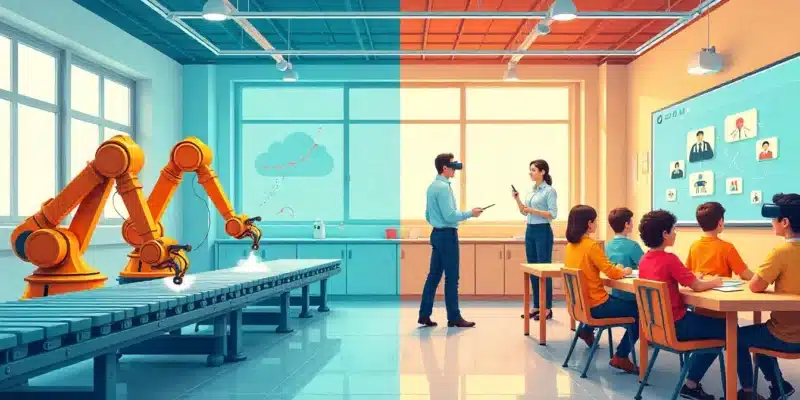
How Industry 4.0 influences and education, work and technology in 2026 is no longer a distant question about the future; it is a reality that workers, students, and companies face every day. Smart factories, connected devices, and artificial intelligence are changing how we learn, how we work, and which skills matter most in the global economy.
In 2026, Industry 4.0 is not just about machines and robots; it is about people and how they adapt to rapid change. Schools, universities, and employers must update their programs so that learners and employees can keep up with new technologies instead of being left behind by them.
What Is Industry 4.0 and Why It Matters
Industry 4.0 is often called the fourth industrial revolution, following earlier waves driven by steam power, electricity, and computers. This new phase combines technologies like the Internet of Things (IoT), artificial intelligence (AI), big data, cloud computing, robotics, and advanced sensors to create smart, connected systems.
In simple terms, Industry 4.0 allows machines, software, and people to share data in real time to make better and faster decisions. For example, a factory can use IoT sensors and AI to predict when a machine will fail and fix it before it breaks, saving money and avoiding downtime.
How Industry 4.0 Influences Education, Work and Technology in 2026
To understand how Industry 4.0 influences education, work and technology in 2026, it helps to look at how fast companies are adopting new tools. Global surveys show that many manufacturers are increasing their investments in Industry 4.0 technologies such as automation, AI, and cybersecurity, while also trying to develop the talent needed to use them.
At the same time, research on the future of jobs finds that demand for routine physical and basic cognitive tasks is shrinking, while demand for technological, analytical, and social skills is rising. This mix of new technology and changing skill demand is forcing education systems and workplaces to transform together.
How Industry 4.0 Is Changing Work and Jobs
Industry 4.0 brings both opportunities and risks for workers. Routine tasks that can be automated are more likely to be done by machines, but new roles appear that require people who can work with technology and solve complex problems.
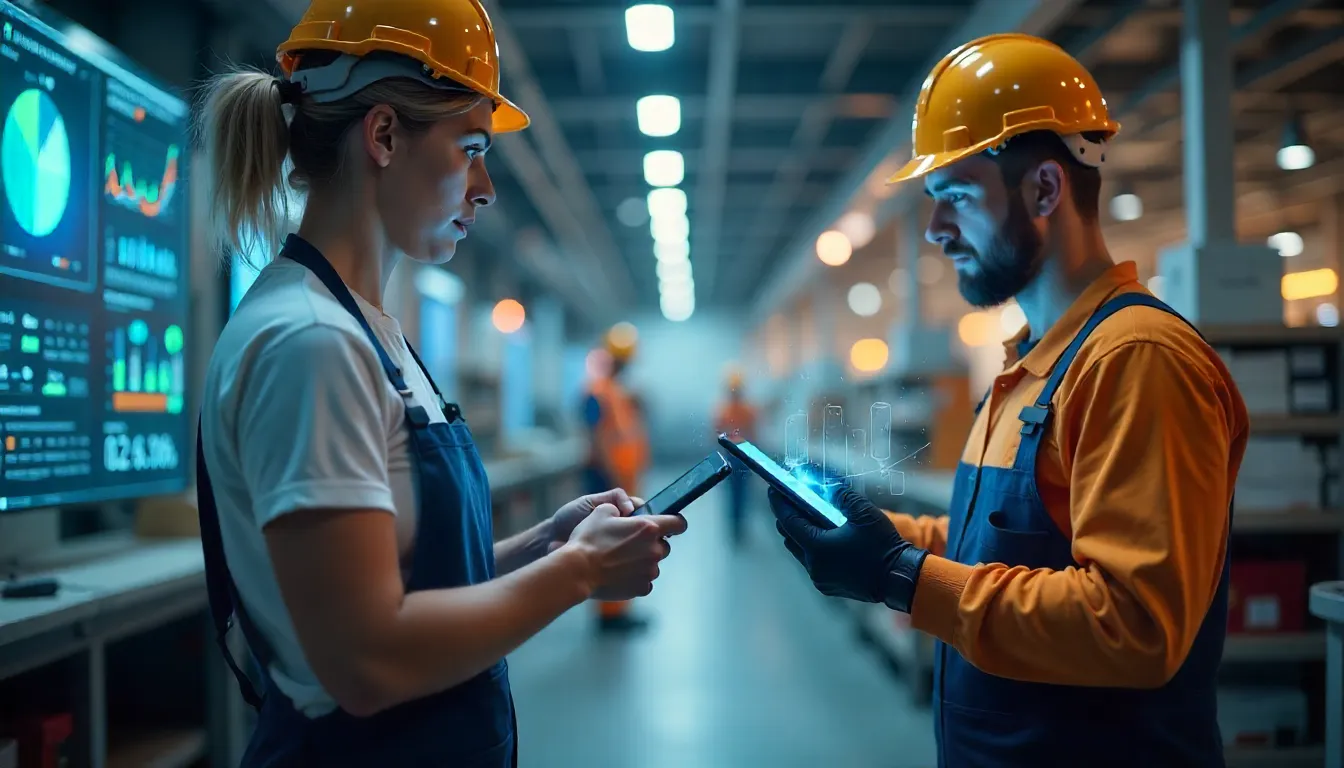
Studies from global organizations show several clear trends:
- Demand for physical and manual skills in repeatable tasks is expected to drop sharply as automation spreads.
- Demand for technological skills, such as programming, data analysis, and working with AI systems, is expected to grow by more than 50 percent.
- Demand for complex cognitive skills, such as critical thinking and problem solving, and for social and emotional skills, such as leadership and teamwork, is expected to rise strongly.
For workers, this means that “low-skill, routine” jobs are at higher risk, while jobs that mix technical knowledge with human skills are more secure. Examples include automation technicians, data analysts, AI specialists, process engineers, and IT security experts, all of which manufacturers already report as high-demand roles for the coming years.
Real-World Example: Skills Gap in Manufacturing
A 2024 Industry 4.0 talent and technology survey of manufacturers found that only a small share of companies had a complete plan for Industry 4.0 in 2019, but this share more than doubled by 2024. Even so, many firms reported that they struggle to find or develop employees with the right digital and technical skills to support new technologies.
These companies expect growing demand for project managers, process engineers, AI specialists, automation technicians, data analysts, application developers, and IT security specialists. To fill these roles, they plan a mix of hiring new talent, upskilling existing workers, and partnering with technical colleges and universities.
How Industry 4.0 Influences Education Systems
When exploring how Industry 4.0 influences education, work and technology in 2026, education is the critical bridge between new technologies and the workforce. Higher education institutions and training providers must redesign curricula, teaching methods, and assessment tools to match the skills that Industry 4.0 demands.
Recent research shows that Industry 4.0 requires a combination of technical, cognitive, and social skills, and that many of these are not fully covered in traditional programs. Universities are therefore experimenting with “Curriculum 4.0,” which focuses on flexible, personalized learning paths, project-based learning, and stronger links between theory and practice.
Future Skills for the Industry 4.0 Workforce
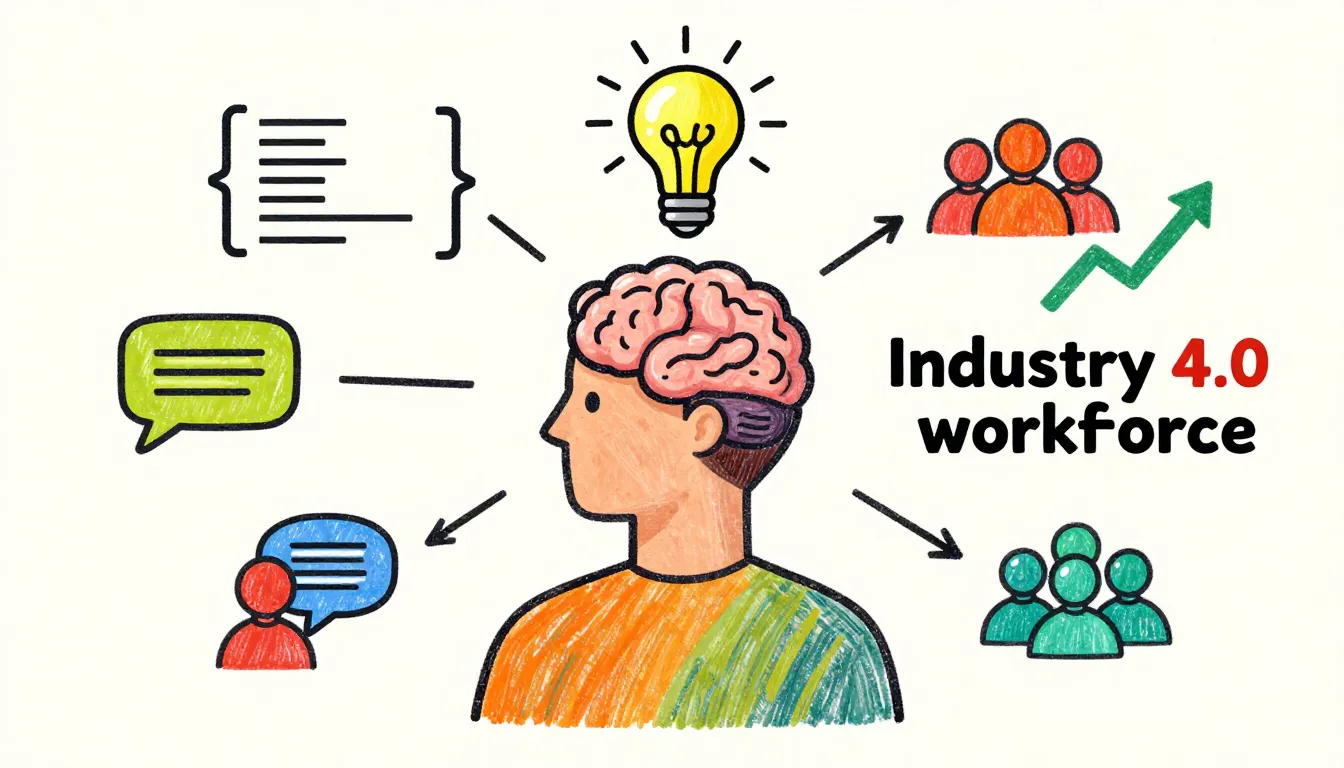
Several studies on future skills identify key competencies that workers need to thrive in Industry 4.0 environments. These skills go beyond knowing how to use a single tool; they focus on being able to adapt, learn, and solve problems in complex, digital systems.

Important skill groups include:
- Technical and digital skills: working with data, automation, IoT, AI, and basic programming.
- Cognitive skills: critical thinking, problem solving, creativity, and systems thinking.
- Social and emotional skills: communication, teamwork, leadership, and the ability to work in diverse, cross-functional teams.
- Self-management skills: resilience, learning to learn, and managing well-being in fast-changing work environments.
Industry 4.0 shifts the focus from learning a fixed set of tasks to developing the capacity to keep learning throughout a career.
Case Study: A University Embracing “Curriculum 4.0”
One example of how Industry 4.0 influences education, work and technology in 2026 is the move by some business schools and engineering faculties to redesign their programs around “Curriculum 4.0.” In these programs, students do not just sit in lectures; they work on real-world projects involving IoT devices, data analytics, and automation tools provided by industry partners.
The curriculum includes flexible modules that allow students to choose tracks in areas such as AI, robotics, or digital manufacturing, and to learn at their own pace through blended online and in-person courses. This approach helps students build technical expertise, improve problem-solving skills, and learn how to collaborate across disciplines, all of which employers value in Industry 4.0 environments.
How Classrooms Are Becoming More Digital and Connected
Industry 4.0 also changes the learning environment itself through new technologies. Many universities and training centers are using virtual labs, simulation tools, and augmented reality platforms to give learners hands-on experience without needing expensive physical equipment.
For example, some programs allow engineering students to practice operating virtual production lines, while others let students explore digital twins of factories to see how data flows between machines and systems. These tools make learning more engaging and help close the gap between classroom theory and workplace practice.
How Companies Are Upskilling and Reskilling Their Workforce
Another central part of how Industry 4.0 influences education, work and technology in 2026 is corporate training. Many companies cannot hire all the new skills they need from the market, so they invest in upskilling and reskilling current employees.

Common approaches include:
- Building internal “academies” or learning programs focused on Industry 4.0 technologies and methods.
- Partnering with universities and technical colleges to design short courses, certificates, and degree programs aligned with specific company needs.
- Using online platforms and micro-credentials to give workers flexible, modular ways to develop new skills while staying in their roles.
Evidence shows that companies planning for Industry 4.0 increasingly rely on a mix of internal development and external partnerships to keep skills aligned with technology roadmaps.
Step-by-Step Guide for Companies Preparing for Industry 4.0
To respond to how Industry 4.0 influences education, work and technology in 2026, companies can follow a clear, practical process.
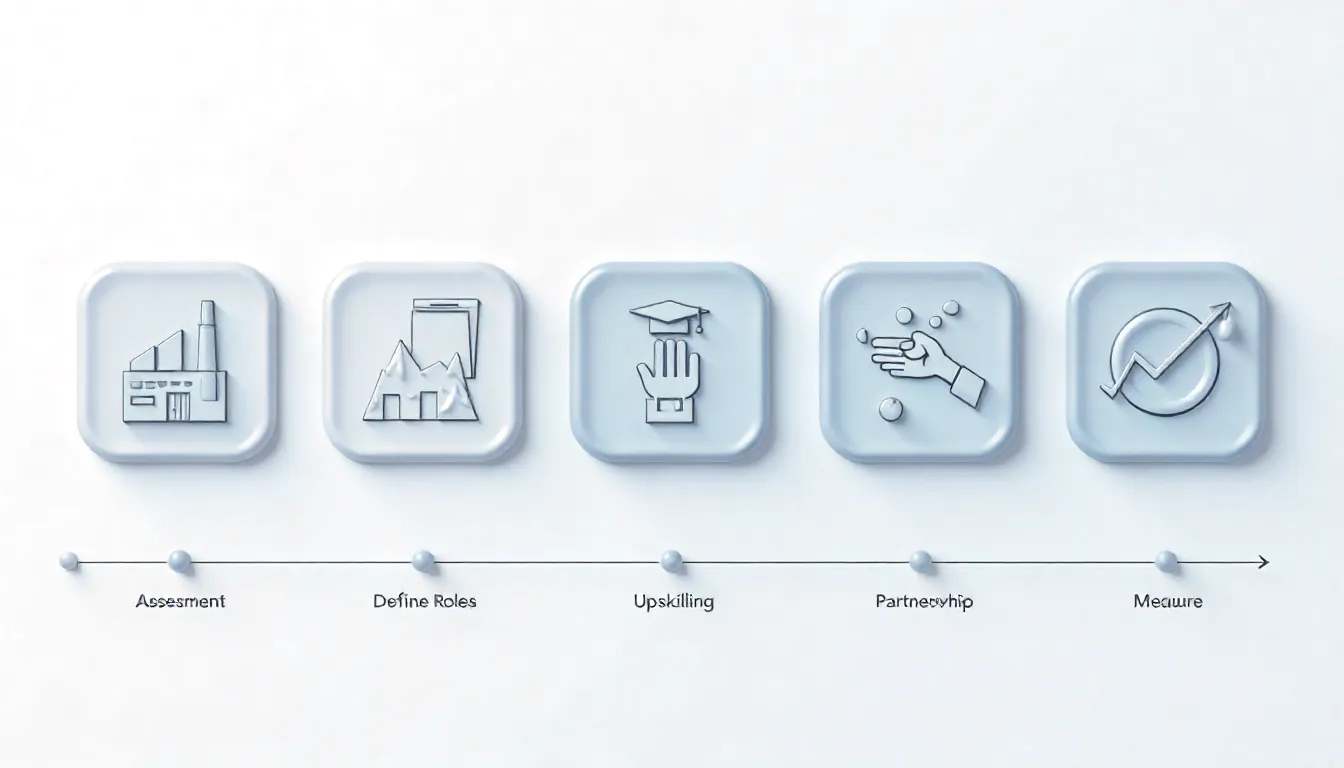
- Assess current technologies and skill gaps
- Map existing systems (machines, software, data tools) and planned upgrades over the next three to five years.
- Run a skills audit to see which roles already have digital competencies and which are at risk of becoming outdated.
- Define key roles and future skills
- Identify critical Industry 4.0 roles such as automation technician, AI specialist, data analyst, and IT security specialist.
- Use research on future skills to define the technical, cognitive, and social skills each role needs.
- Design an upskilling and reskilling roadmap
- Decide which skills can be developed internally and which require hiring or outsourcing.
- Create learning paths that combine short courses, projects, mentoring, and on-the-job practice.
- Partner with education providers
- Work with technical colleges and universities to co-create programs and access modern labs.
- Offer internships, apprenticeships, and project sponsorships so students can solve real problems for the company.
- Measure impact and continually update
- Track metrics such as productivity, quality, downtime, and employee engagement after training.
- Update learning programs regularly as technologies and business needs change.
Practical Tips for Individuals Preparing Their Careers
For individuals, understanding how Industry 4.0 influences education, work and technology in 2026 can help guide career choices and learning plans. The goal is not to become an expert in every technology but to build a strong mix of digital, analytical, and human skills.

Practical steps include:
- Invest in digital literacy: Learn the basics of data, coding, and how AI-powered tools work in your field.
- Strengthen problem-solving and critical thinking: Join projects, competitions, or case studies that require analyzing real-world challenges.
- Develop communication and teamwork: Practice explaining technical topics in simple language and working in diverse teams.
- Adopt a lifelong learning mindset: Use online courses, micro-credentials, and professional communities to keep updating your skills.
Emerging Technologies Reshaping Workplaces
The technologies behind Industry 4.0 are becoming more powerful and more affordable, which explains why interest in how Industry 4.0 influences education, work and technology in 2026 is growing. Key technologies include:
- Industrial Internet of Things (IIoT): Networks of sensors and devices that collect data from machines, products, and environments.
- Artificial intelligence and machine learning: Systems that analyze large data sets to make predictions, optimize processes, or support decisions.
- Collaborative robots (cobots): Robots designed to work safely alongside humans, taking over repetitive tasks while people handle complex ones.
- Additive manufacturing (3D printing): Techniques that build products layer by layer, enabling customization and faster prototyping.
- Augmented and virtual reality: Tools for training, remote support, and design visualization.
These technologies are not only reshaping factories but also laboratories, hospitals, logistics centers, and even classrooms.
Challenges and Risks in the Industry 4.0 Era
While the benefits of Industry 4.0 are significant, there are also serious challenges that influence how education, work and technology evolve in 2026.
Key concerns include:
- Skill mismatches: Many workers fear becoming “irrelevant” because their current skills do not match what employers need.
- Inequality: Workers with high levels of education and digital skills may benefit more than those in routine, low-skill jobs.
- Well-being and mental health: Fast-paced change and constant learning pressures can affect stress levels and job satisfaction.
- Ethical and social issues: Questions about privacy, algorithmic bias, and the impact of automation on communities require new policies and regulations.
Education and training systems must address these risks by supporting inclusive learning opportunities, digital ethics, and strong social support.
How Policymakers and Institutions Can Respond
Public policies play a major role in shaping how Industry 4.0 influences education, work and technology in 2026. Governments and institutions can guide this transformation by investing in infrastructure, skills, and social protection.
Effective measures include:
- Funding large-scale reskilling and upskilling programs focused on future skills.
- Supporting partnerships between schools, universities, and industry to co-create relevant curricula and apprenticeships.
- Updating labor regulations to protect workers while enabling flexible, technology-enabled work arrangements.
- Promoting access to digital tools and connectivity so that learners in all regions can benefit from Industry 4.0 opportunities.
FAQ: How Industry 4.0 Influences Education, Work and Technology in 2026

- What does Industry 4.0 mean for students in 2026?
Industry 4.0 means students must build strong digital, problem-solving, and teamwork skills rather than only memorizing facts. Many schools now use project-based learning, virtual labs, and flexible curricula to prepare students for changing technologies and jobs. - How does Industry 4.0 change the skills workers need?
Workers need fewer routine manual skills and more technological, analytical, and social skills. Employers are looking for people who can work with data, automation, and AI while also communicating clearly and collaborating across teams. - Are jobs at risk because of Industry 4.0?
Some jobs that involve repetitive, predictable tasks are at higher risk of automation, especially in manufacturing and logistics. However, Industry 4.0 also creates new roles in fields such as AI, cybersecurity, robotics, and data analysis, which can offset losses if workers can reskill. - How can education systems adapt to Industry 4.0?
Education systems can adapt by updating curricula, adding more digital and data-related content, and focusing on critical thinking, creativity, and collaboration. They can also strengthen partnerships with industry so that programs match real skill needs and offer hands-on learning experiences. - What should companies do to prepare their workforce?
Companies should assess current skills, define future roles, and design structured upskilling and reskilling programs, often in partnership with education providers. They should also create cultures that value continuous learning and give employees time and support to develop new competencies. - How does Industry 4.0 influence education, work and technology in 2026 for small and medium-sized enterprises (SMEs)?
For SMEs, Industry 4.0 offers tools to improve efficiency and compete globally but can be hard to adopt due to limited resources and skills. Many SMEs rely on regional partnerships, shared training programs, and external service providers to access Industry 4.0 technologies and expertise. - What can individuals do today to stay relevant in the Industry 4.0 era?
Individuals can stay relevant by building digital literacy, joining real-world projects, and regularly updating their skills through online courses and certifications. Focusing on a mix of technical, cognitive, and social skills gives the best chance of success in workplaces transformed by Industry 4.0.
Preparing for an Industry 4.0 Future
Understanding how Industry 4.0 influences education, work and technology in 2026 is essential for students, workers, companies, and policymakers. Smart technologies are changing which skills matter, how people learn, and how organizations compete, making continuous learning and collaboration across sectors more important than ever.
Those who invest in future-ready skills, flexible education, and thoughtful integration of technology will be best positioned to benefit from this new industrial revolution. Whether you are a student choosing a program, a professional planning your next career move, or a leader designing training strategies, now is the time to act and prepare for the next wave of Industry 4.0 change.
References:
-
- https://pmc.ncbi.nlm.nih.gov/articles/PMC9278314/
- https://www.mckinsey.com/featured-insights/mckinsey-explainers/what-are-industry-4-0-the-fourth-industrial-revolution-and-4ir
- https://newmfgalliance.org/industry-4-0-talent-technology-survey-2024/
- https://www.weforum.org/stories/2024/01/industry-4-fourth-industrial-revolution-workers/
- https://www.weforum.org/publications/the-future-of-jobs-report-2023/
- https://www.frontiersin.org/journals/education/articles/10.3389/feduc.2024.1412018/pdf
- https://www.academy.rwth-aachen.de/en/programs/short-courses/detail/summer-school-smart-production-engineering-in-industry-4-0-cus












Comments